G’day Barry.
Barry is retired with an SMSF and paid a financial adviser for strategic advice leading into retirement and shortly after retiring. He’s interested in passive income, so he chose the Rask Terra (50/50) strategy after watching us for many years, reading our TMD and booking a call with our team. He and his wife Julia keep 2 years’ worth of cash in a high yield cash account and term deposits, to fund their lifestyle. They like the Terra strategy because it was designed for retirees with income in mind.
He plans to invest $1 million with Rask over the next year, given it’s secure, his SMSF always owns the assets, it’s fully transparent, it’s supports Rask’s mission of educating Australians, and he could create an account for his grandkids down the line.
(Note: Barry that Barry sought retirement advice and read the Rask Invest PDS and TMD – and spoke to our team to get comfortable.)
Let’s assume Barry invests $1 million in one go and estimate the fees and costs (in reality he might do it in a few chunks, which would impact brokerage fees):
Rask’s management fees: $5,500
Context: This fee is before Barry is offered our large balance fee discount. Of course, this fee covers his and Julia’s HIN-based ownership, full tax reporting via Class, automation features, access to 15+ online courses for her and her family, Rask events, stock research, etc. It would also put his mind at ease that Julia would have a trustworthy and supportive team (at Rask) to help her invest, should anything happen to him.
Estimated brokerage: ~ $431.20
Context: This assumes no rebalancing event takes place and he invests all in one go. If he staged his investments, the brokerage fee would go up. If we did a rebalance, he would pay more in brokerage. And if he did an in-specie transfer within his SMSF, his fee would be lower. As most of Barry’s ETF purchases would be over $10,000 each, the brokerage fee he would pay to our trusted third party broker is: 0.044% x [trade value] for each position.
Keep in mind, Barry can ask us to send his accountant (via Class, Sharesight, Navexa, or something else) a feed of all the tax reporting for his SMSF, hopefully saving him or his tax adviser plenty of time and hourly fees.
ETF fees: $1,680
Context: This assumes Terra’s blended ETF fees of around 0.168% per year ($20,000 x 0.168% = $1,680 paid to the ETF providers). ETF fees can change from time-to-time, and we may swap out some of our holdings from time-time.
We always try to target low fee ETFs for your portfolio, but we do not believe low fees = better returns. Fees are only one of many variables we can control, so there may be times when a cheaper option exists but it’s not the right choice. For example, one of Vanguard’s lowest cost ETFs directly exposes Aussie investors to US death and withholding taxes! There are many other reasons why we wouldn’t recommend just choosing the cheapest option in investing… or life.
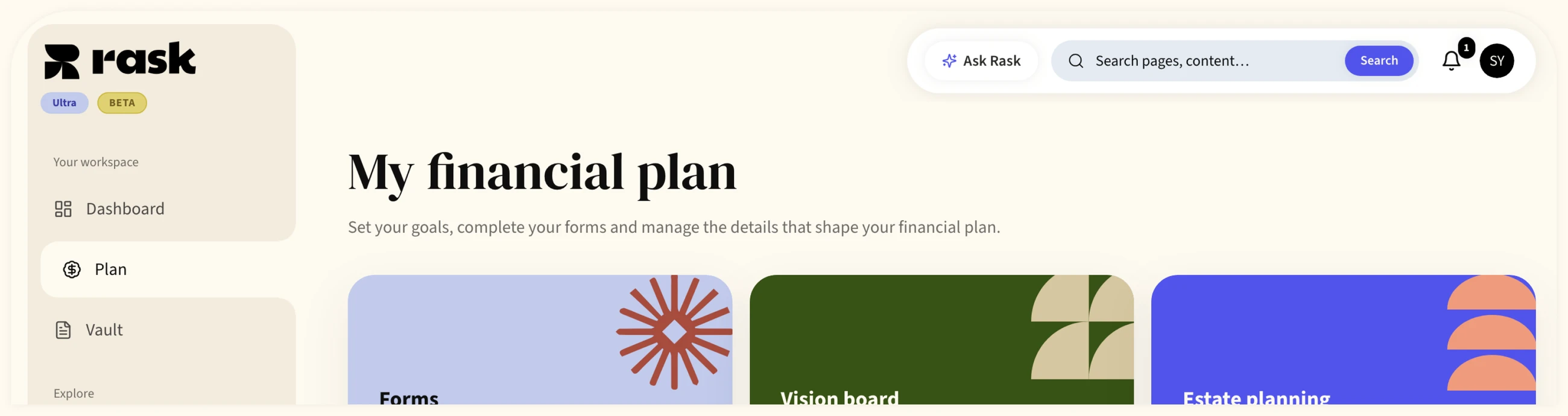
Remember, unlike many other fund managers, your portfolio (and fees!) are on display 24/7 in your Rask Invest account. So even if we wanted to try to hide fees, we couldn’t.
In Barry & Julia’s case, we expect their Rask Invest Terra portfolio would produce significantly more passive income than the total fees and costs charged via Rask Invest.
Psst. this is an example only Barry’s example is for illustration only. It includes our management fees, ETF fees and an estimate of brokerage but it may not show every cost or fee. For example, it does not include the estimated buy-sell spread (a very small and ‘nearly invisible cost’ incurred by all investors when buying shares or ETFs). Please refer to the PDS.